
Why FallZone Poured-in-Place and FallZone Synthetic Grass Playground Surfacing Systems Are Safer and Cheaper Long-Term than wood chips
1. Superior Safety:
– FallZone Poured-in-Place: This unitary surface, made of rubber granules bound with polyurethane, provides consistent shock absorption (often rated for falls up to 10-12 feet per ASTM F1292). It doesn’t displace or degrade like wood chips, ensuring reliable protection across the entire playground.
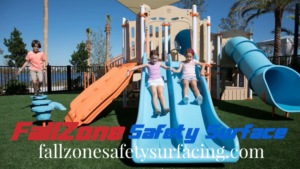
– FallZone Synthetic Grass: Combining a cushioned underlayer with artificial turf, it offers fall protection up to 12 feet while mimicking natural grass. Its padded system maintains safety in all weather, unlike wood chips that lose efficacy when wet or frozen.
2. Low Maintenance: Both FallZone Playground Safety Surfacing options require minimal upkeep—no raking, topping off, or replacing every few years. FallZone Poured-in-Place might need occasional cleaning or patching after a decade, while FallZone Synthetic Grass can be hosed down or blown clear of debris. This slashes labor and material costs compared to wood chips’ constant demands.
3. Longevity and Cost Savings: Wood chips might cost $1-$3 per square foot initially but need replacing every 2-4 years, driving lifetime costs higher (e.g., $10,000+ over 10 years for a small playground). FallZone Poured-in-Place ($9-$16/sq ft) and FallZone Synthetic Grass ($8-$15/sq ft) have higher upfront costs but last 10-15 years with little additional expense, often breaking even or saving money by year 5-7. Add in reduced injury liability, and the savings grow.
4. No Hidden Dangers: FallZone Safety Surfaces don’t harbor concealed hazards. Their seamless design eliminates splinters, sharp edges, and pest habitats, enhancing child safety.
5. Enhanced Accessibility: Both meet and exceed ADA standards long-term, providing smooth, stable surfaces for all users, unlike wood chips that degrade into uneven terrain.
6. Aesthetic and Functional Benefits: FallZone Poured-in-Place allows vibrant, customizable designs, while FallZone Synthetic Grass offers a natural look without mud or mess. Both stay cleaner and more comfortable than wood chips, which track dust and debris.
1. Inconsistent Fall Protection: Wood chips degrade and compact over time, reducing their ability to cushion falls. High-traffic areas—like under swings or slides—often thin out, leaving uneven depths that fail to meet safety standards (e.g., ASTM F1292 for impact attenuation). Studies show that 70% of playground injuries stem from falls, and inadequate surfacing is a leading factor.
2. Splinters and Sharp Edges: Even engineered wood fiber (EWF), designed for playgrounds, can splinter, posing risks of cuts, abrasions, or embedded debris in children’s skin. This is a persistent issue, especially as the material weathers.
3. Hidden Hazards: Wood chips can conceal dangerous objects like broken glass, animal waste, or sharp sticks, increasing injury risks. Their loose nature makes it hard to spot and remove such threats without constant sifting.
4. Maintenance Nightmares: Wood chips require frequent raking to maintain even coverage and depth, plus periodic replenishment as they decompose or get displaced—sometimes annually in harsh climates. This ongoing labor and material cost adds up quickly. For example, one school district reported spending $6,000 per year per school on wood chip maintenance.
5. Accessibility Issues: While technically ADA-compliant when new, wood chips become less navigable for wheelchairs or mobility devices as they shift and compact, reducing inclusivity over time.
6. Health Risks: Mold, insects, and allergens can thrive in damp wood chips, potentially triggering respiratory issues or infections. If treated with chemicals like chromated copper arsenate (CCA), they may even pose toxicity risks, though this is less common with modern EWF.
Wood chips’ short-term affordability is outweighed by their safety risks—unreliable fall protection, injury potential, and hidden hazards—plus escalating maintenance costs. FallZone Poured-in-Place and FallZone Synthetic Grass deliver consistent safety, durability, and lower lifetime expenses, making them smarter investments for playgrounds. While the initial price tag is higher, their 10-15 year lifespan and minimal upkeep translate to fewer headaches and more savings, all while keeping kids safer.
Contact Your FallZone Surfacing Specialist Today For More Information
"*" indicates required fields