
Top 10 Reasons Playground Rubber Mulch is Unsafe & Dangerous for playground surfacing!
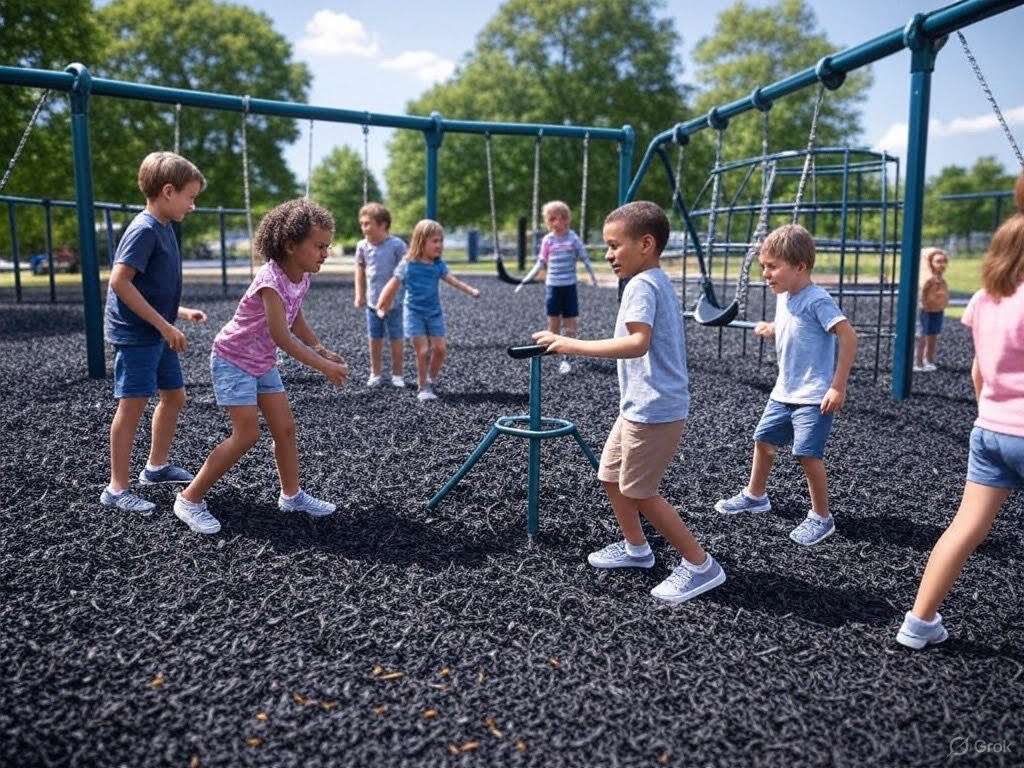
1. Toxic Chemical Leaching: Playground Rubber mulch contains volatile organic compounds (VOCs), polycyclic aromatic hydrocarbons (PAHs), and heavy metals like lead and zinc, which can leach into soil or water, especially when heated or weathered, posing health risks to children through inhalation or skin contact.
2. Carcinogenic Compounds: PAHs in Playground rubber mulch are classified as probable carcinogens by the EPA. Prolonged exposure, especially in young children, may increase cancer risk, as kids often touch or ingest small particles.
3. Heat Retention: Playground Rubber mulch absorbs and retains heat, reaching temperatures up to 160°F (71°C) in direct sunlight, which can cause burns or heat-related injuries to children playing on or near it.
4. Inhalation of Dust and Vapors: Degrading Playground rubber mulch releases fine particles and chemical vapors, which children can inhale during play, potentially causing respiratory irritation or long-term lung issues.
5. Ingestion Risk: Young children may ingest playground rubber mulch pieces, which can lead to choking or exposure to toxic chemicals like benzene and phthalates, affecting development.
6. Environmental Contamination: Chemicals leaching from playground rubber mulch can contaminate groundwater and soil, harming local ecosystems and potentially exposing children to indirect environmental toxins.
7. Fire Hazard: Playground rubber mulch is flammable and, once ignited, burns at high temperatures, releasing toxic smoke. This poses a risk in playgrounds near heat sources or vandalism-prone areas.
8. Allergic Reactions: Some children may have allergic reactions to chemicals or latex residues in playground rubber mulch, leading to skin rashes or respiratory issues upon contact or inhalation.
9. Poor Sanitation: Playground rubber mulch can trap dirt, urine, or other contaminants, creating unsanitary conditions. It’s harder to clean than natural mulch, increasing the risk of bacterial growth.
10. Long-Term Degradation: Over time, playground rubber mulch breaks down into smaller particles, increasing dust and chemical release, which amplifies health and environmental risks while reducing its cushioning effectiveness.
Note: While playground rubber mulch meets some playground safety standards for impact attenuation (e.g., ASTM F1292), the chemical and environmental concerns have led organizations like the EPA and CDC to recommend caution and further study.
Contact Your FallZone Surfacing Specialist Today For More Information
"*" indicates required fields